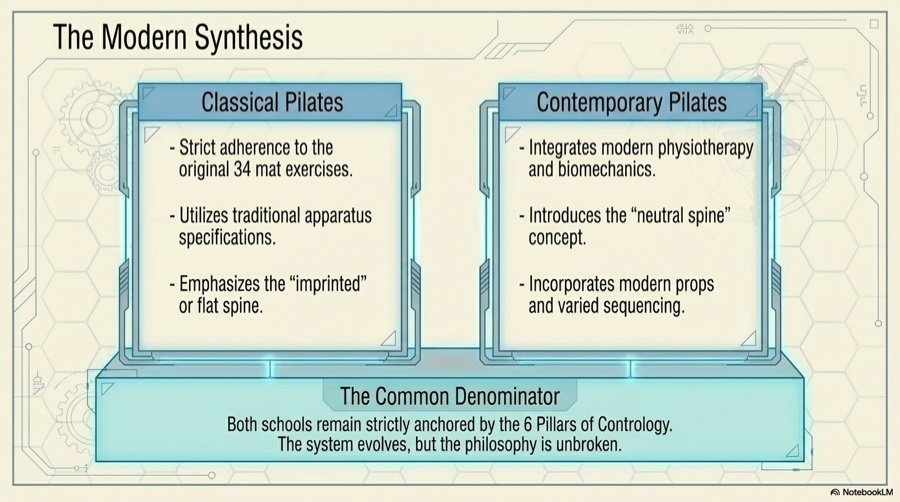
The distinction between classical and contemporary Pilates is one of the most important modern search topics because it affects how people choose classes, teachers, and training programs. Classical Pilates generally refers to work that aims to preserve Joseph Pilates' original order, equipment, and teaching logic. Contemporary Pilates adapts the method through newer movement science, physical therapy, props, sequencing, and broader fitness contexts.
Neither term is simple. Classical schools can differ in interpretation, and contemporary teachers can still be deeply respectful of the source. The useful historical point is that Pilates became a global method after leaving the control of one studio and one name.
The trademark turning point
The 2000 Pilates trademark case is a pivotal moment in the modern story. A federal court ruled that "Pilates" was a generic term for an exercise method rather than a protected trademark. That decision helped open the field for broader use of the name across studios, teacher trainings, equipment companies, and hybrid forms.
For the site, this legal history explains why Pilates is everywhere and why quality varies. The name can describe a rigorous lineage practice, a clinical rehabilitation session, a boutique reformer class, or a fusion workout. The shared word does not guarantee a shared method.
How to frame it fairly
A credible article should avoid turning classical versus contemporary into a culture war. The better question is: what problem is each approach trying to solve? Classical Pilates protects continuity. Contemporary Pilates often tries to integrate new knowledge and serve new populations. The tension between the two is part of the method's living history.
Free guide
Get the Pilates Starter Decision Guide
Still choosing between class styles, equipment, and studio language? The free guide turns the history into a practical first-class decision.
Powered by MailerLite. You can unsubscribe at any time.
Sources and further reading
- Balanced Body: The Pilates Lawsuit.
- Pilates Method Alliance: Pilates History.
- Project source: The Biomechanical Dossier, slide deck.