The Alchemy of Constraint
A short visual introduction to the early constraints, discipline, and physical-culture influences that shaped Joseph Pilates' method.
Pilates, made approachable
Meet the Reformer, understand the method, and learn the story behind Pilates so your first mat, studio, online, or equipment class feels easier to choose.
The story
Pilates becomes easier to understand when it is seen as a method, not just a class. Joseph Pilates built his work around breath, posture, strength, and disciplined use of the whole body.
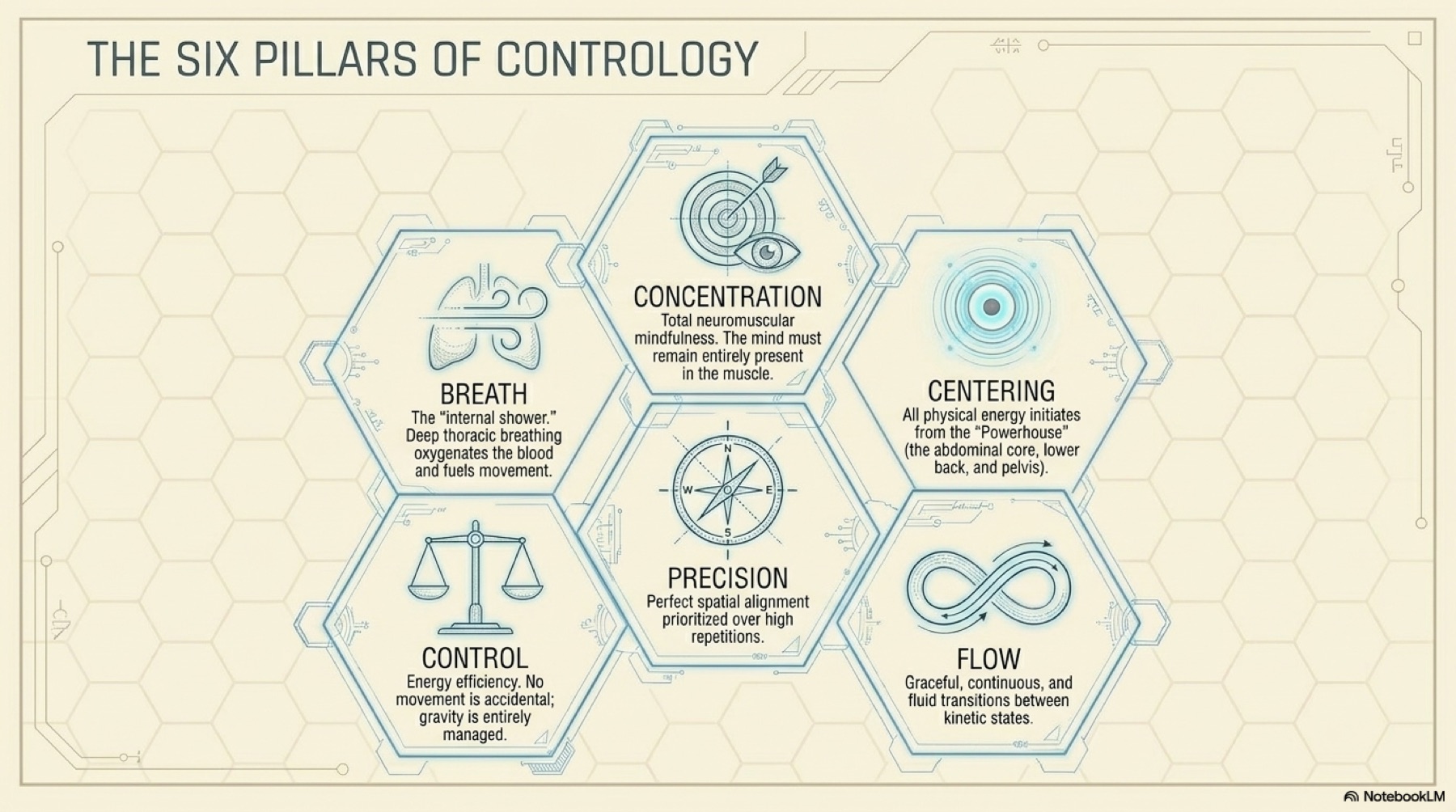
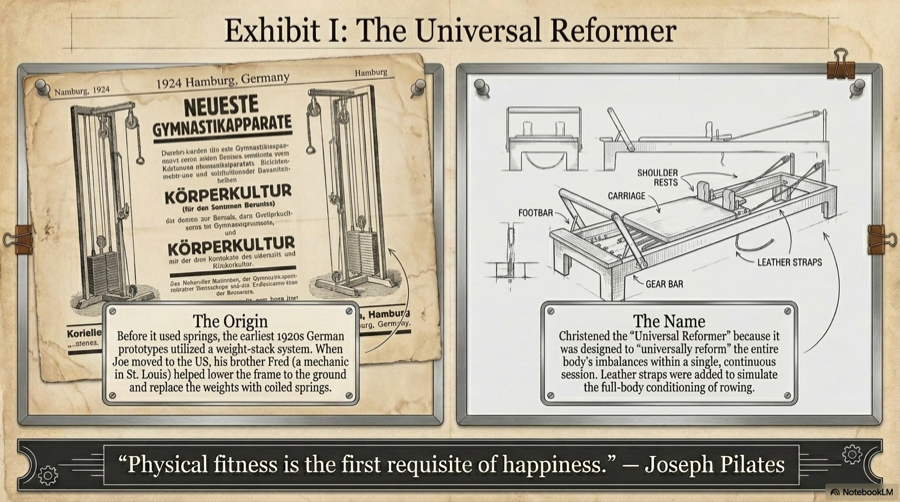
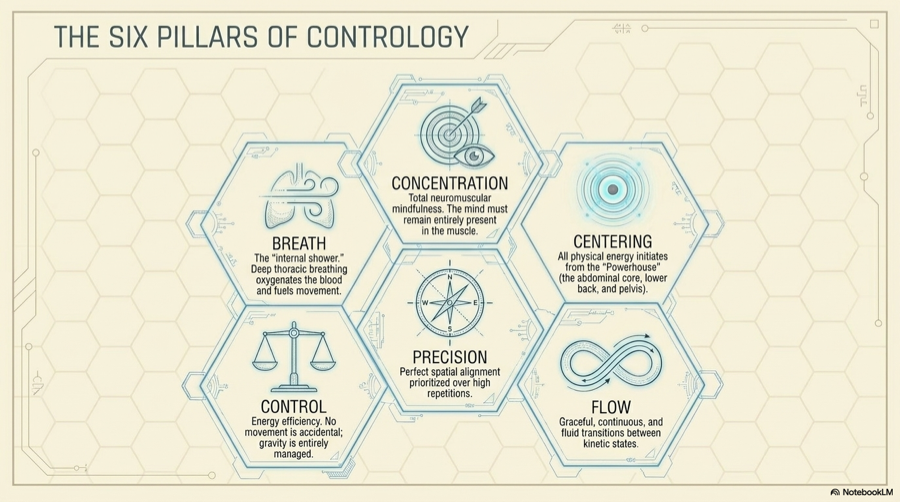
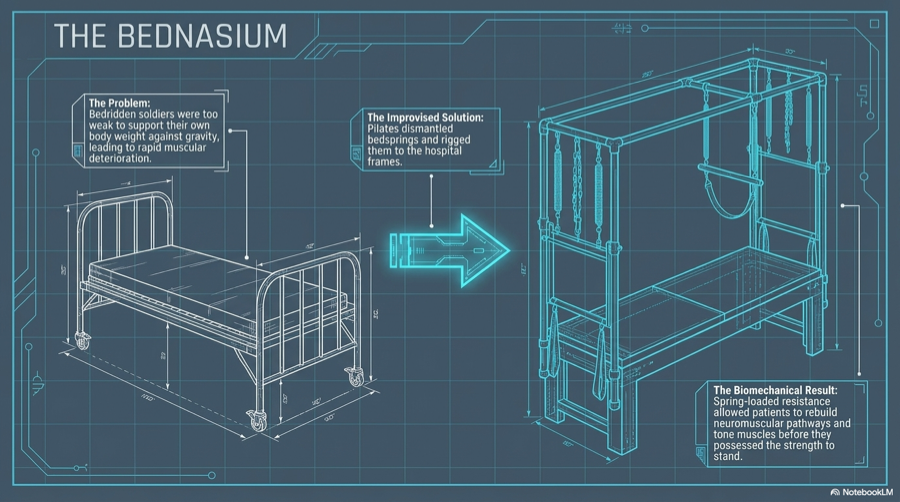
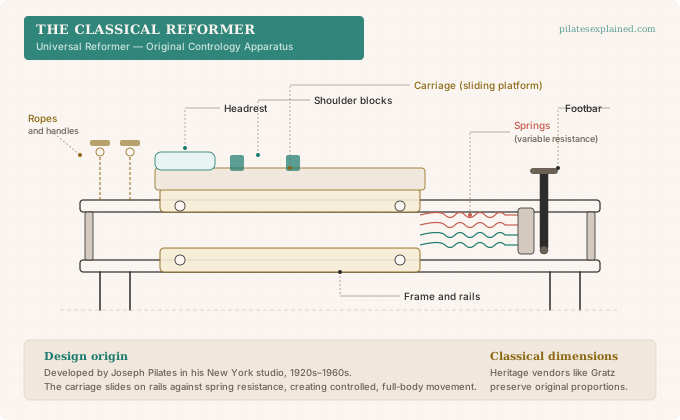
He called the work Contrology: a practice built on concentration, precision, alignment, and controlled movement. The equipment made those ideas tangible by adding spring resistance, support, and feedback.
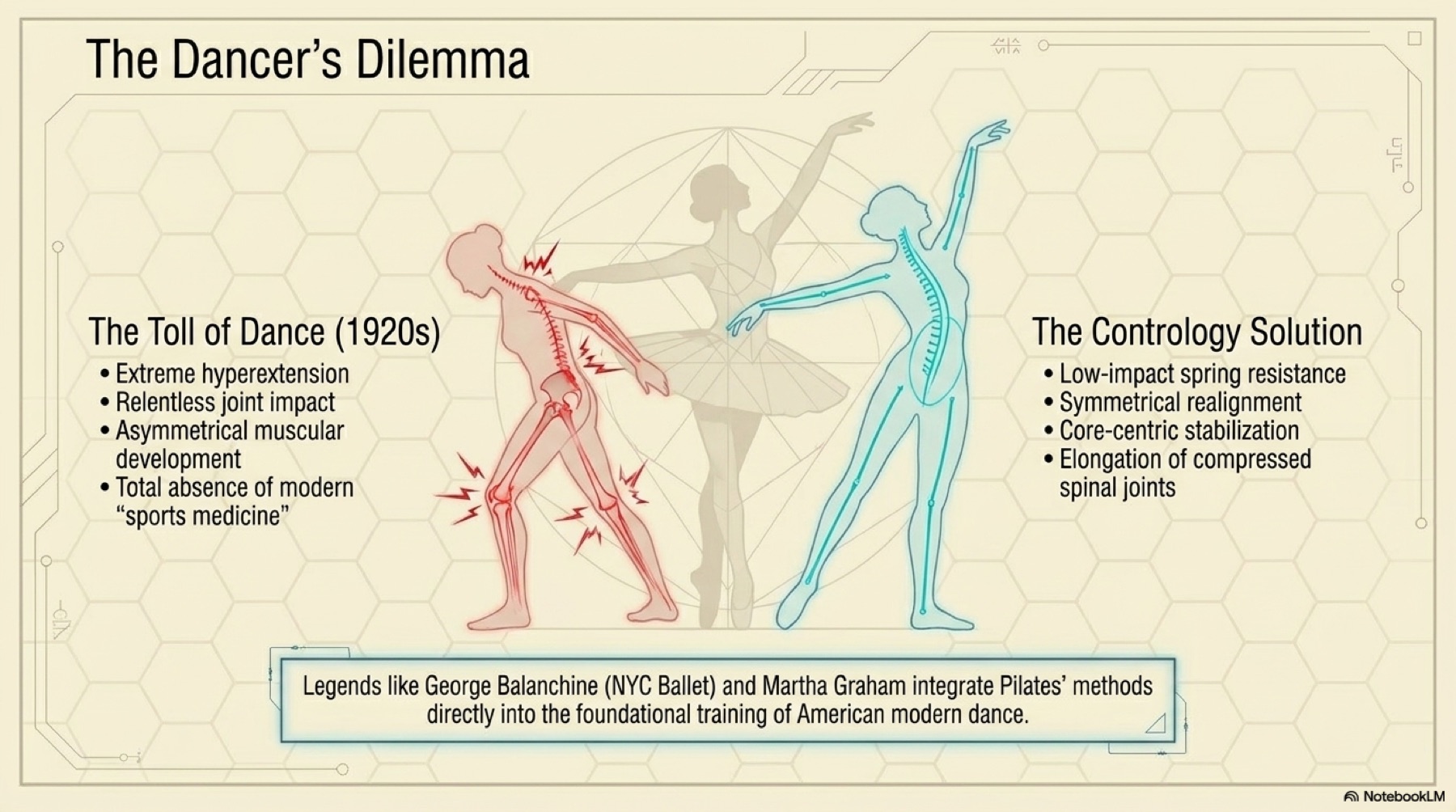
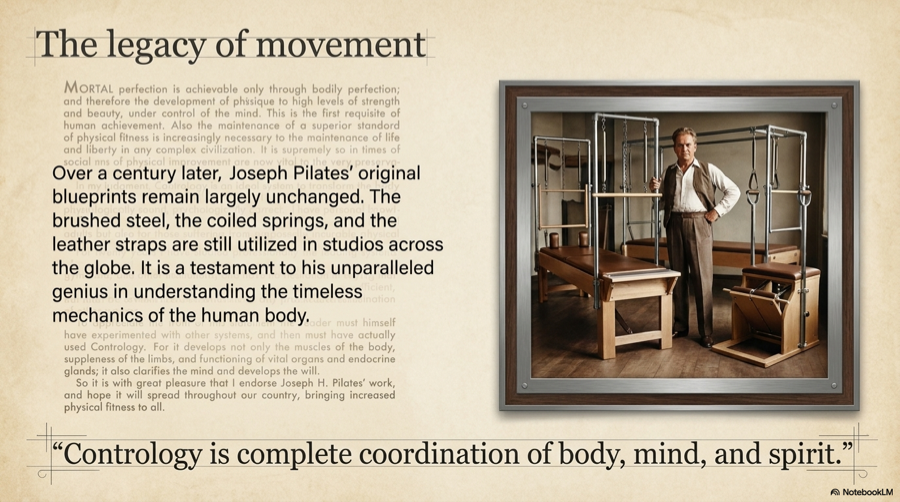
Joseph and Clara Pilates later brought the method into a New York studio, where dancers and performers helped spread it because it offered strength without sacrificing coordination, flexibility, and control.
Watch and listen
A short visual introduction to the early constraints, discipline, and physical-culture influences that shaped Joseph Pilates' method.
A compact story of Joseph and Clara Pilates, the equipment, movement principles, and studio culture that helped the method spread.
BBC Witness History offers a short audio feature on people who met Joseph Pilates and remembered the original studio culture.
Listen at the source: BBC Witness History - Meeting Mr. Pilates.
Story in pictures
Start with the pressure that shaped the origin story, the principles behind Contrology, and the dance-world connection that helped Pilates travel.
Equipment gallery
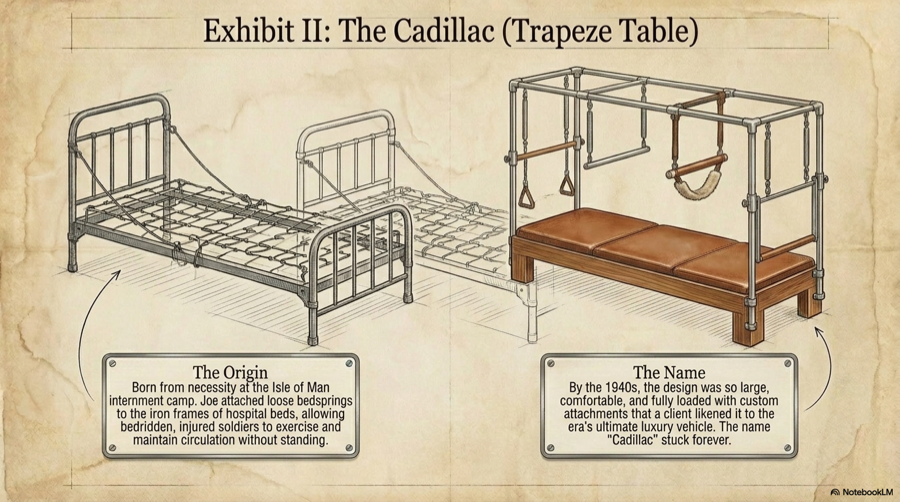
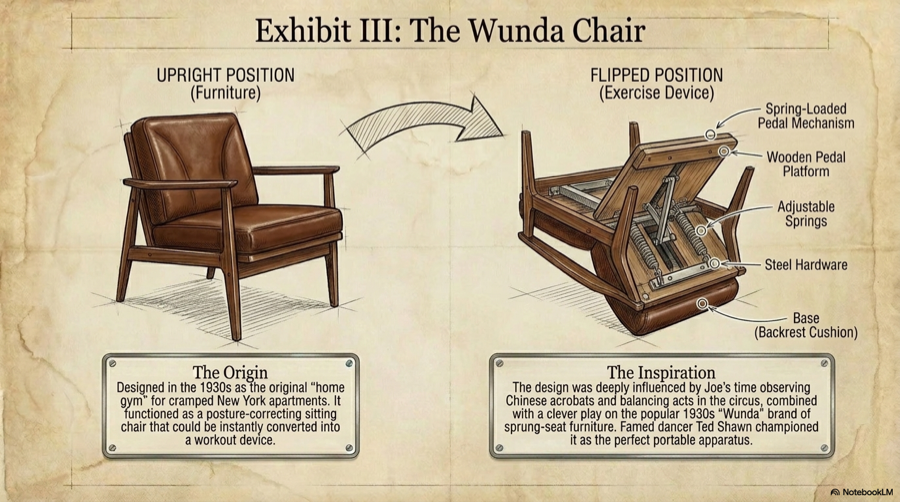
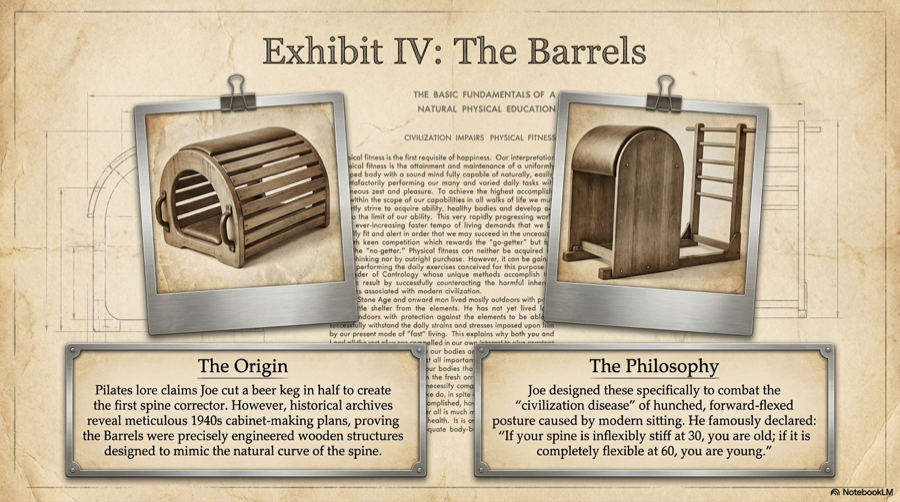
Comparison guide
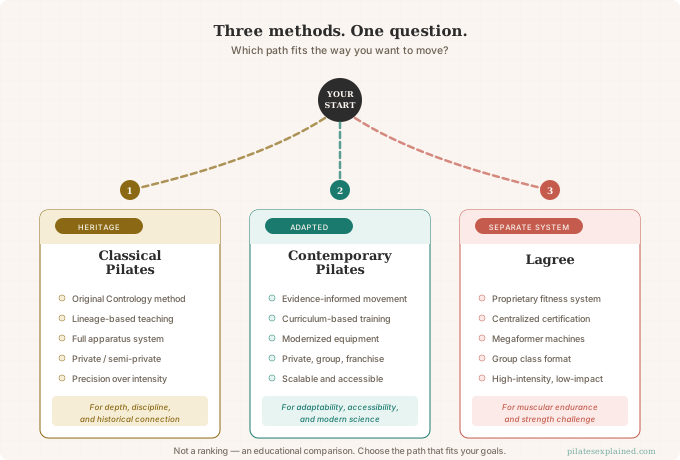
These methods often appear in the same searches, but they do not come from the same lineage or business model. Use this as an educational comparison, not a ranking.
What defines each approach and where it came from.
| Classical Pilates | Contemporary / Modern Pilates | Lagree | |
|---|---|---|---|
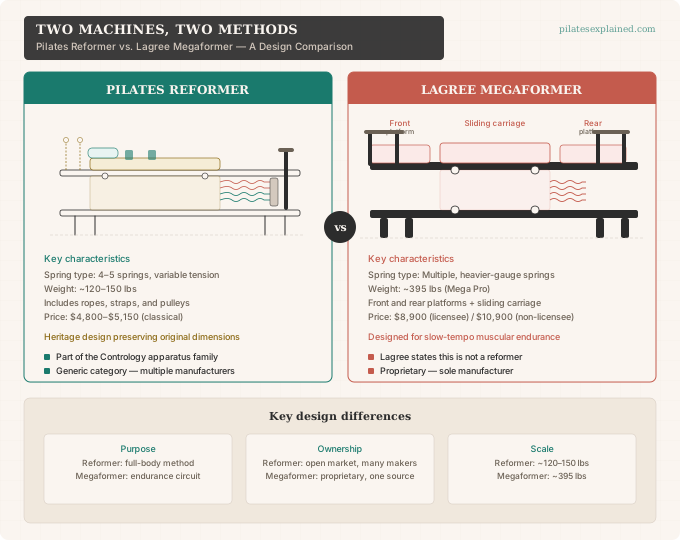
| What it is | The original Contrology method developed by Joseph and Clara Pilates, preserved through direct teacher-to-teacher lineage. | A broad umbrella of Pilates schools that retain the core method while adapting it with modern biomechanics and rehabilitation science. | A separate, proprietary fitness system founded by Sebastien Lagree in 1998. Lagree itself states it is not Pilates. |
| Origin | New York studio, 1920s. Joseph Pilates taught Contrology to dancers, performers, and clients until his death in 1967. | Emerged after the 2000 federal ruling that "Pilates" is a generic term. Schools like STOTT, BASI, and Balanced Body formalized contemporary approaches. | Los Angeles, 1998. Sebastien Lagree began experimenting with bodybuilding techniques on reformers, then built proprietary machines. |
| Governance | Lineage-based. Authority flows through first-generation teachers, often called the Elders, and their schools. | Curriculum-driven. Large education ecosystems include STOTT, BASI, Balanced Body, and franchise systems like Club Pilates. | Private intellectual property. Proprietary equipment, trademarks, centralized certification, and studio licensing. |
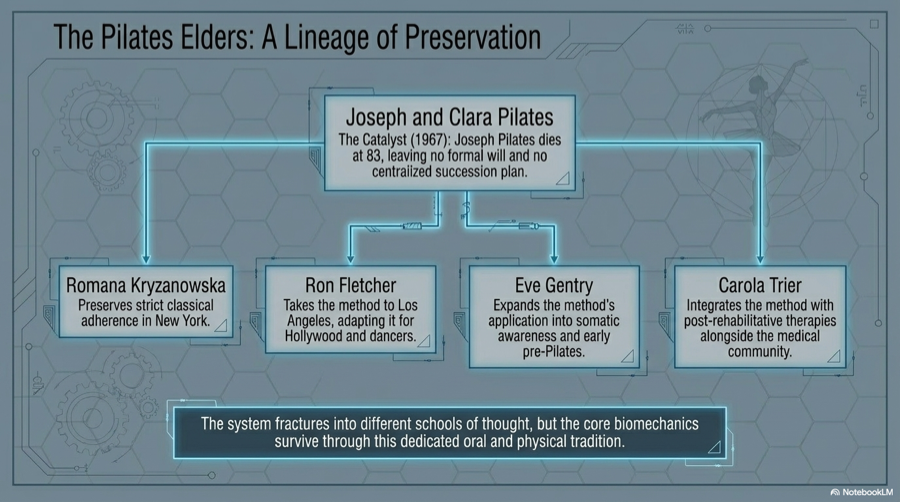
| Key figures | Joseph and Clara Pilates; Romana Kryzanowska, Kathy Grant, Ron Fletcher, Eve Gentry, Lolita San Miguel, Jay Grimes, and other first-generation teachers. | Moira Merrithew, Rael Isacowitz, Balanced Body educators, and franchise leaders. | Sebastien Lagree as founder and method owner. |
| Equipment | Full studio system: Reformer, Cadillac, Wunda Chair, Barrels, and correctors. | Modernized reformers, towers, chairs, props, and hybrid accessories. | Megaformer family and related Lagree machines. The company says these are not reformers. |
The differences you notice on the mat, reformer, or machine.
| Dimension | Classical Pilates | Contemporary / Modern Pilates | Lagree |
|---|---|---|---|
| Class goal | Integrated whole-body method: posture, control, coordination, and full-body conditioning through a coherent system. | Same inheritance, updated with neutral alignment, special-population modifications, and anatomy-driven cueing. | High-intensity muscular endurance under slow tempo and continuous tension, with minimal transition time. |
| Sequencing | Lineage-based and recognizably ordered, especially on mat and classical equipment. | May reorder or modify work around anatomy, injuries, class theme, or training goal. | Designed to minimize downtime and maximize time under tension. Transitions are a programming variable. |
| Tempo | Controlled and breath-led. Pace serves precision and flow. | Similar, but often adjusted to the client and exercise objective. | Formalized slow, controlled reps with an eight-count tempo. Momentum is explicitly discouraged. |
| Intensity | Low-to-moderate by default, though advanced classical work can be demanding. | Low-to-moderate but highly scalable, from rehab to athletic conditioning. | Explicitly marketed as high-intensity and low-impact. |
| Class format | Historically private or semi-private with strongly teacher-guided progression. | Private, clinical, semi-private, and large-group formats are all common. | Created for group training. Studio classes typically run 40 to 50 minutes. |
| What it feels like | A coherent full-body method. Sessions often feel like a disciplined, flowing practice. | More customizable and therapist-adjacent. Sessions adapt to the person in the room. | A proprietary strength-endurance circuit on a spring-based machine. Expect muscle fatigue and sweat. |
How each method reaches practitioners and what it costs.
| Factor | Classical Pilates | Contemporary / Modern Pilates | Lagree |
|---|---|---|---|
| Studio model | Dominated by independent studios and premium private or semi-private instruction. | Spans independent educators and large franchise systems. Club Pilates reports 1,200+ studios globally. | Licensed studios, not a franchise. Equipment sales and trademark enforcement are central to the business model. |
| Typical setting | Smaller, often boutique studios with classical equipment. Exact national size benchmarks are unspecified. | Club Pilates reports a typical studio of about 1,500 sq ft serving up to 12 people at once. | Space depends on machine count. A Mega Pro recommends 100 sq ft per unit. |
| Equipment cost | A small classical package with Reformers, Cadillac, and Chairs can run into the tens of thousands before buildout. | Club Pilates FDD reports six-figure equipment and initial fit-out costs. | Machine spend depends on the studio path. Megaformer rooms are materially different from low-cost micro-studio setups. |
| Pricing model | Privates, duets, small groups, and workshops. No standardized national membership norms. | Membership tiers, private sessions, walk-ins, and class packs are common. | Decentralized local pricing. Corporate monetizes through license tiers, equipment, and training. |
| Instructor path | Lineage-led and decentralized. Authority flows through teachers rather than a central regulator. | Curricular and modular, often with 500+ hour comprehensive programs. | Centralized Lagree certification with defined levels and course fees. |
What the science supports, and where the gaps are.
| Question | Classical & Contemporary Pilates | Lagree |
|---|---|---|
| Physical capacity benefits? | Often yes, especially flexibility, dynamic balance, and muscular endurance. Evidence quality varies across studies. | Current public evidence base appears very small and should be treated as exploratory. |
| Pain and rehab benefits? | Often useful as an adjunct, especially for low back pain and some musculoskeletal conditions. It is not consistently superior to other exercise. | No specific rehabilitation evidence is currently established in the public literature. |
| Safety profile? | Probably low risk when competently taught, though systematic adverse-event reporting remains weak across studies. | No direct comparative injury-rate literature available. Intensity and continuous fatigue imply the need for strong coaching. |
| Marketing vs. evidence | Benefits are real but should not be oversold. Systematic reviews support some outcomes more strongly than others. | Marketing claims currently outrun the independent evidence base. Treat broad claims with caution unless sources are supplied. |
| Are they interchangeable? | Classical and Contemporary Pilates share a common lineage and historical foundation, though they differ in emphasis and approach. | No. Lagree is historically, legally, pedagogically, and commercially different from Pilates. |
Choose your path
Take the five-question quiz to compare classical Pilates, contemporary Pilates, Lagree, and online or mat practice.
Timeline
Born in Monchengladbach, Germany, Pilates later frames physical culture as a path toward resilience.
Gymnastics, boxing, self-defense, animal movement, and body-mind traditions shape his thinking.
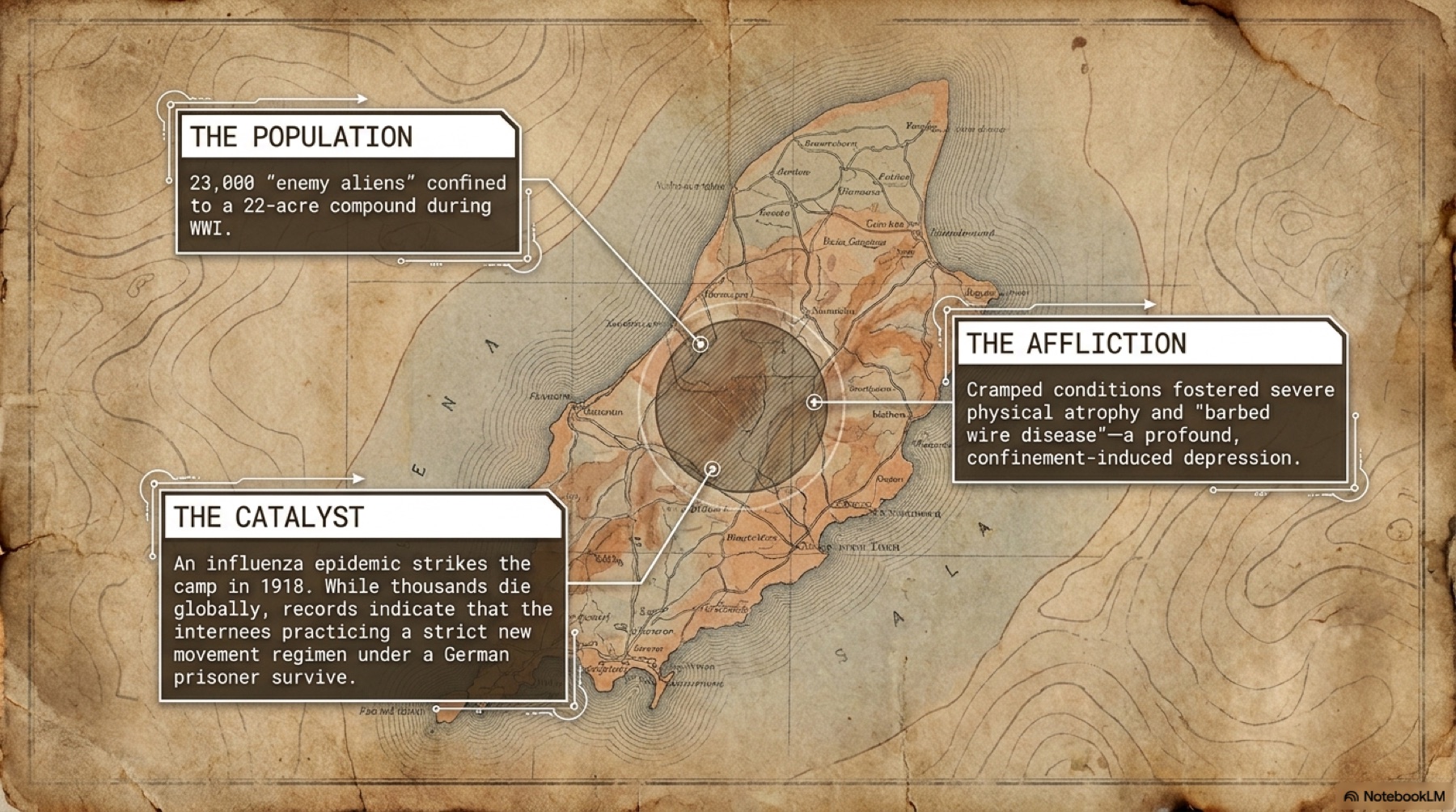
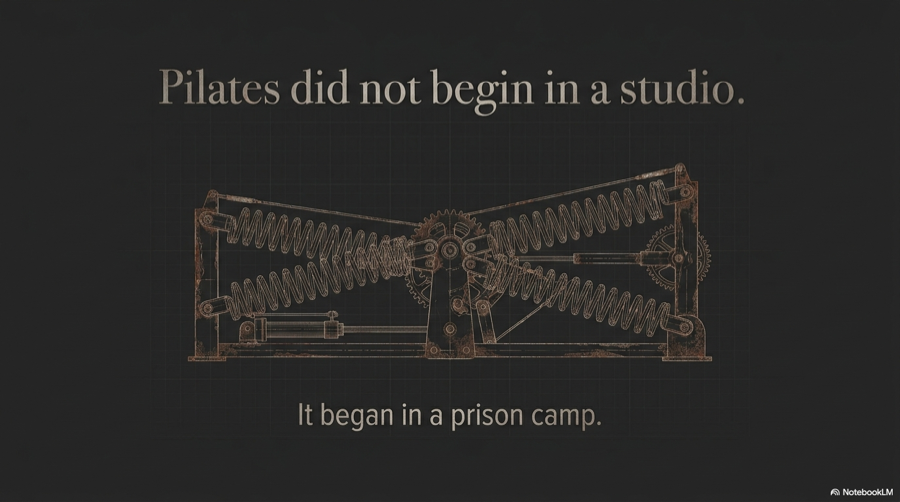
World War I internment becomes the formative setting for early Contrology ideas.
The wartime and influenza-era context strengthens the origin story around daily discipline and resilience.
Their partnership becomes central to teaching, studio operations, and the survival of the method.
The studio's proximity to dance spaces helps connect Contrology to performers and injured dancers.
Joseph Pilates publishes his first book, setting out a broader philosophy of health and modern life.
The mat sequence and method principles are documented for a wider public.
Dancers help make the studio a quiet authority in American movement culture.
Clara Pilates keeps the studio and teaching continuity alive after Joseph's death.
First-generation teachers preserve, adapt, and spread the method through different lineages.
Companies such as Balanced Body help move Pilates equipment into a broader studio market.
The Pilates name is ruled generic, accelerating the method's spread across schools and businesses.
Studios, apps, virtual instruction, and short-form media bring new audiences to the method.
Modern interest in Pilates creates a new need for careful historical storytelling and source-aware archives.
Contrology and method
The modern word "Pilates" can hide the original idea. Contrology was framed as a full-body discipline where quality of movement mattered more than repetition count.
Breathing coordinates effort, rhythm, and attention.
Core control supports the spine, pelvis, and efficient movement.
Small adjustments matter because the method rewards accuracy.
Control becomes useful when movement links cleanly from one action to the next.
Beginner reading path
StartWhat to wear, what you will do, and what the cues mean.
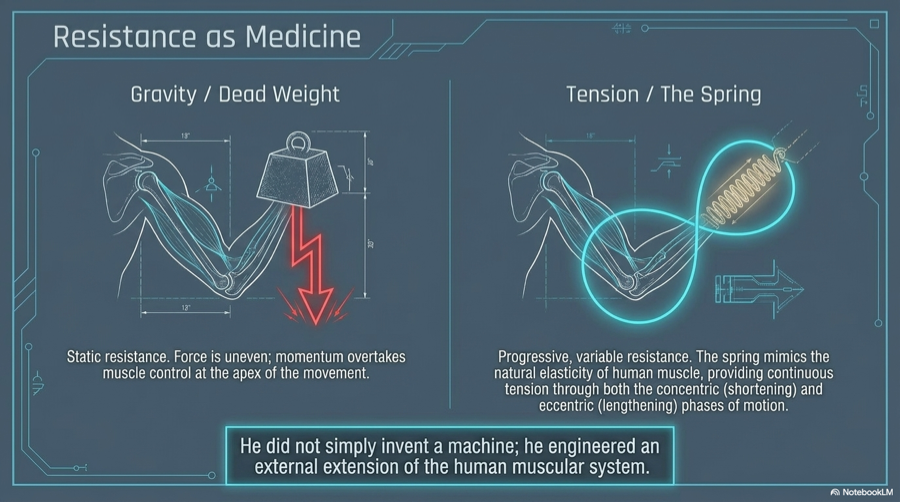 Explainer
The small equipment idea that changes how the Reformer feels.
 Evidence
A cautious, sourced look at what the research actually supports.
01The original name and philosophy behind Pilates.
 02
02Founder biography beyond the generic summary.
 03
03Why constraint became the origin hook.
04The machine that made spring resistance iconic.
05Hospital-bed logic becomes a studio ecosystem.
06Small footprint, serious control.
 11
11The untold partner who made Contrology teachable.
 12
12The first book and Joseph Pilates' early health philosophy.
13Two parallel methods with different histories and aims.
 14
14Same roots, different branches.
 15
15Why Lagree is adjacent to Pilates, not a Pilates lineage.
 16
16Match your goals to Classical, Modern, or Lagree.
Trust and sources
Original site strategy: authority positioning, story-first architecture, video edge, and domain direction.
Search landscape, long-tail article plan, E-E-A-T guidance, local/class discovery, and monetization paths.
Visual equipment guide used for the Reformer, Cadillac, Chair, Barrels, matrix, and ecosystem graphics.
Visual history deck used for the origin, Bednasium, Contrology, dancers, elders, and modern spread graphics.
Original Contrology source used to frame the method around disciplined daily practice.
Pilates Method Alliance, Britannica, Balanced Body legal history, BBC Witness History, Cochrane, and WHO.
Studio discovery
Ready to try the method? Here are two neutral ways to find classes near you. Pilates Explained does not endorse, verify, or certify any studio or instructor.
Practical guides
Buying equipment, choosing classes, or building a reading shelf is easier when the lineage and tradeoffs are clear.
GuideA cautious, category-first guide to major home Reformer choices.
GuideWhat actually matters for mat work and spinal articulation.
GuideOriginal books and respected modern references.
GuideCost math and decision rules for beginners.