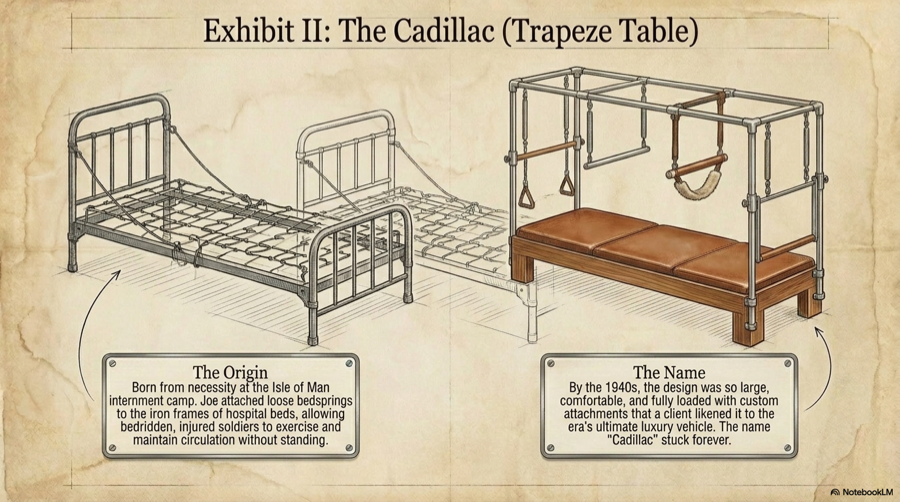
If the Reformer is the most famous Pilates machine, the Cadillac is the clearest reminder of the method's therapeutic imagination. It looks partly like a bed, partly like a frame, and partly like a workshop. Springs, bars, straps, and a raised table create options for assisted movement, resistance, stretching, and control.
The Cadillac connects naturally to the internment and hospital-bed origin story. Whether one treats every detail of that story cautiously or literally, the design logic is unmistakable: take a bed-like surface and make it active. The body can be supported while the limbs move through guided resistance. A weak, injured, stiff, or cautious mover can begin with help rather than force.
That support is not just for beginners. The Cadillac can also make advanced work extremely demanding because it removes excuses. The frame gives reference points. Springs reveal asymmetry. Bars and straps create clear pathways. The practitioner must coordinate effort without hiding behind speed.
A complete rehabilitation ecosystem
The Cadillac works well as a homepage visual because it embodies the site's core thesis: Pilates was not invented as a trend. It grew from a serious attempt to engineer better movement. The equipment asks what the body needs now: assistance, resistance, mobility, control, or confidence.
For article strategy, the Cadillac page can serve searchers interested in rehabilitation, back pain, flexibility, private studio work, and the difference between mat and equipment Pilates. It gives the site a bridge between history and practical modern intent.
Free guide
Get the Pilates Starter Decision Guide
Still choosing between class styles, equipment, and studio language? The free guide turns the history into a practical first-class decision.
Powered by MailerLite. You can unsubscribe at any time.
Try it today
Want to try a Cadillac?
Take one taught session before buying equipment. A teacher can help you understand spring setup, transitions, and whether this apparatus fits your body and goals.
Sources and further reading
- Pilates Method Alliance: Pilates History.
- Project source: The Pilates Blueprint, slide deck.
- Project source: The Biomechanical Dossier, slide deck.