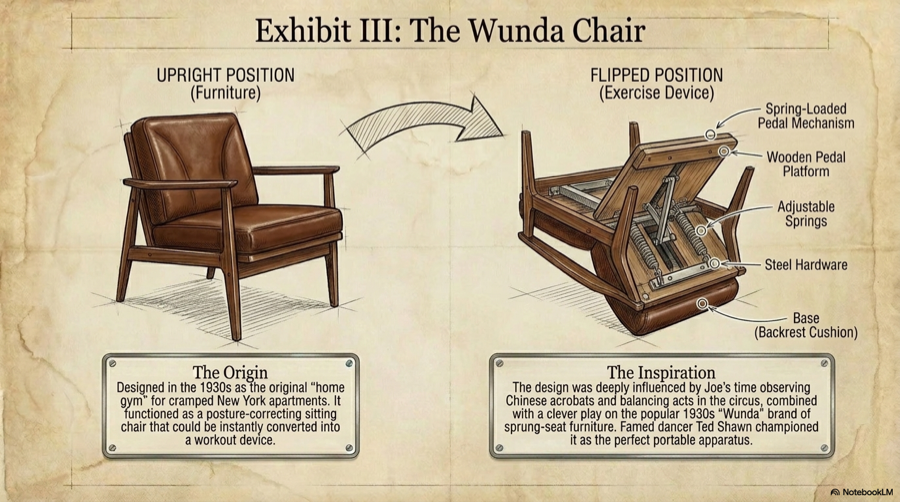
The Wunda Chair is one of the most efficient objects in the Pilates equipment family. It does not have the theatrical scale of the Cadillac or the gliding drama of the Reformer. Its power comes from compression. A seat, a base, and a spring-loaded pedal become a demanding test of balance, strength, and organization.
Historically, the chair makes sense within Joseph Pilates' larger habit of turning furniture into training equipment. A chair is ordinary. A Wunda Chair is ordinary furniture made corrective, athletic, and diagnostic. It invites upright work and challenges the practitioner to coordinate the center of the body while the limbs press, lift, or balance.
Because the equipment is compact, it also helps tell the story of Pilates as a practical studio system. The method was not a single machine. It was an ecosystem of surfaces, springs, arcs, pedals, and frames. Each piece asked a different question of the body.
Why the chair is so revealing
On the Reformer, the carriage can make motion feel fluid. On the Cadillac, the frame can offer support. On the Wunda Chair, the small base raises the stakes. The practitioner has to find vertical control, foot pressure, hip organization, and spinal support with less assistance.
That makes the chair a strong article topic for both history and search. It is visually distinctive, less commonly understood than the Reformer, and connected to questions about balance, athleticism, and functional strength.
Free guide
Get the Pilates Starter Decision Guide
Still choosing between class styles, equipment, and studio language? The free guide turns the history into a practical first-class decision.
Powered by MailerLite. You can unsubscribe at any time.
Try it today
Want to try a Wunda Chair?
Take one taught session before buying equipment. A teacher can help you understand spring setup, transitions, and whether this apparatus fits your body and goals.
Sources and further reading
- Pilates Method Alliance: Pilates History.
- Project source: The Pilates Blueprint, slide deck.
- Project source: Pilates SEO and Content Strategy, Google Doc.