Not medical advice. This page is educational. If your pain is new, severe, radiating, linked to injury, accompanied by unexplained symptoms, or not improving, speak with a qualified health professional before starting a new exercise program.
A lot of people do not arrive at Pilates because of history. They arrive because their lower back has been talking to them after long days at a desk, after pregnancy, after a flare-up, or after a friend or clinician suggested controlled movement might help. So the real question deserves a careful answer: what does the evidence actually say?
The short answer
For chronic, non-specific lower-back pain, Pilates-based exercise is a reasonable low-to-moderate-intensity option for many people. Research reviews suggest it can reduce pain and disability compared with doing little or no exercise, especially in the short to medium term. The important caveat is that Pilates does not appear to be clearly superior to other well-structured forms of exercise.
In plain English: movement helps many backs, and Pilates is one useful way to move. It is not uniquely magic.
What the evidence supports
| Claim | Best reading |
|---|---|
| Pilates can help some people with chronic non-specific lower-back pain. | Supported cautiously. Cochrane found low- to moderate-quality evidence favoring Pilates over minimal intervention for pain and disability. |
| Pilates is better than all other exercise. | Not established. Cochrane found no conclusive evidence that Pilates is superior to other exercise forms. |
| Exercise matters in chronic low-back-pain care. | Supported. WHO guidance includes exercise programs among recommended non-surgical interventions for chronic primary lower-back pain. |
| Pilates replaces medical evaluation. | No. Pain patterns and individual risk factors matter. Persistent or concerning symptoms belong with a qualified professional. |
Why Pilates gets associated with back care
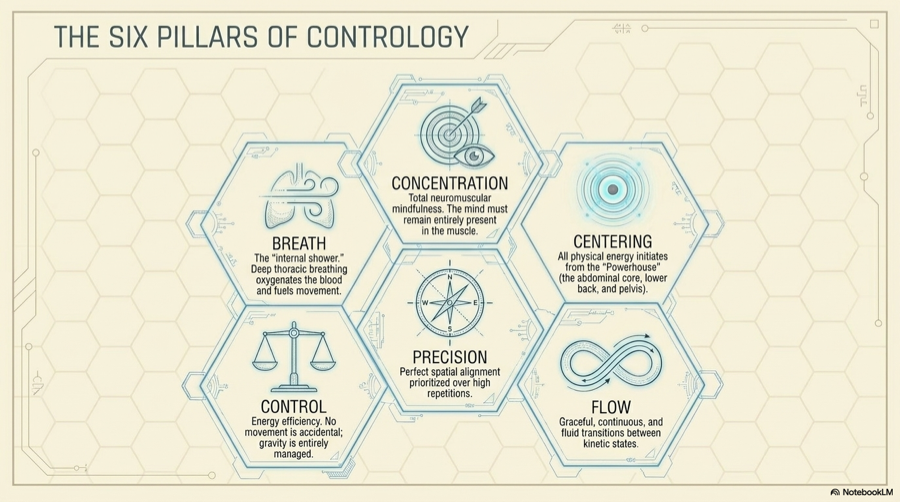
The association is not only marketing. Joseph Pilates built Contrology around controlled, precise movement and the body's center: the trunk muscles that help organize the spine and pelvis. The apparatus adds springs, straps, and support so movement can be graded rather than simply loaded.
That maps naturally onto what many back-care approaches encourage: keep moving when appropriate, build tolerance gradually, and learn to control the trunk without panic or bracing.
What the research landscape suggests
The most useful pattern is measured, not dramatic. Pilates has supportive evidence for chronic non-specific lower-back pain when compared with minimal intervention. The certainty is limited by study size, study quality, follow-up length, and the fact that "Pilates" is not identical from one class or trial to another.
Broader exercise research also matters. A Cochrane review of exercise for chronic low-back pain found that exercise probably reduces pain compared with no treatment, usual care, or placebo. WHO's chronic low-back-pain guidance also includes exercise programs as part of non-surgical care.
What this does not mean
It does not mean Pilates is a diagnosis, treatment plan, or substitute for individual medical care. Lower-back pain can be common and non-specific, but it can also behave in ways that require assessment. The safer editorial position is simple: Pilates can be a good movement option after you have enough confidence that exercise is appropriate for your situation.
How beginners with back concerns can approach it
- Ask your clinician or physical therapist first if you are under care or unsure whether exercise is appropriate.
- Tell the instructor before class. A good teacher will modify around your back and ask practical follow-up questions.
- Consider an intro or private session instead of jumping straight into a large group class.
- Expect gradual progress over weeks, not a dramatic fix in one session.
- Stop and ask for help if pain becomes sharp, radiating, escalating, or unfamiliar.
A note on Lagree and other look-alikes
Lagree classes happen on spring-based machines that resemble Reformers, so they are easy to confuse with Pilates. Lagree is a separate proprietary system and is typically designed as high-intensity strength-endurance work. If back comfort is your reason for starting, know which class you are booking and ask about modifications before you go.
The honest bottom line
If your back has been nagging and you are drawn to Pilates, the evidence offers cautious encouragement. Pilates is controlled, scalable, and adaptable, and it has reasonable support for chronic non-specific lower-back pain. Just hold the expectations realistically, get individual symptoms checked when in doubt, and treat the method as one good path among several.
Choose carefully
Use the beginner decision tools gently
If you are cleared for exercise and comparing first steps, start with the quiz or a small beginner-friendly class rather than a high-intensity challenge.