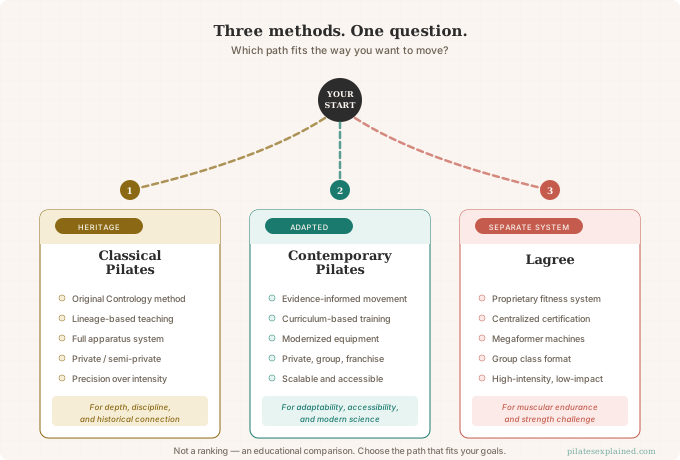
The best Pilates option is not always the most authentic or the most expensive. It is the format you can practice safely, consistently, and with enough instruction to understand what you are doing. A beginner comparing mat, Reformer, online classes, and home equipment is really comparing access, feedback, cost, and commitment.
Use ranges rather than exact prices. Studio pricing changes by city, teacher, class size, and package. Online subscriptions and class marketplaces change offers frequently. The point is to understand the shape of the decision before clicking a checkout button.
| Path | Typical cost pattern | Best for | Main risk |
|---|---|---|---|
| Mat class | Usually the lowest studio cost. | Learning fundamentals and building consistency. | Less individual feedback in large classes. |
| Reformer class | Typically higher because equipment and class size matter. | People who benefit from spring feedback and structured apparatus work. | Cost can limit frequency. |
| Online Pilates | Often a monthly subscription or library access model. | Home practice, schedule flexibility, and maintenance between live sessions. | Limited correction and easy overestimation of form. |
| Home Reformer | Large upfront equipment purchase plus space. | Committed practitioners with prior instruction. | Buying too soon or buying the wrong category. |
A beginner decision rule
If you are simply curious, start with a beginner mat class or a low-pressure online series. If you are drawn to the equipment, take an introductory Reformer session before judging the method. If your schedule is the barrier, combine occasional live instruction with online practice. If you already attend weekly and want more access, then compare home equipment.
Class marketplaces can be useful for sampling studios, but they should not replace judgment. Look for clear beginner labeling, teacher attention, and studio language that explains what kind of Pilates is being taught. If you are recovering from injury or have a medical concern, ask a qualified professional before using a general fitness class as a solution.
How to compare value
Do not compare only the posted class price. Compare the amount of feedback you receive, how often you can attend, how much travel friction exists, and whether the format makes you more confident. A more expensive introductory private session can be good value if it prevents months of confused home practice.
For many beginners, the strongest plan is blended: one or two live sessions to learn orientation, a mat or online routine for consistency, and occasional Reformer classes if the apparatus feels motivating. That path avoids the biggest early mistake: buying a large machine before knowing whether the method fits your life.
When home equipment makes sense
A home Reformer makes sense when you already know the exercises you plan to practice, have safe space, understand spring changes, and can afford a machine without needing it to replace instruction entirely. It is a practice multiplier, not a substitute for learning.
Related reading: how to choose a method, the Reformer history, and the home Reformer guide.
Quick questions
What is the cheapest way to start Pilates?
Mat classes or online instruction are usually the lowest-cost entry points, especially if you already have a suitable mat.
Why are Reformer classes more expensive?
They require large equipment, smaller class sizes, more setup, and more teacher attention than many mat formats.
Is online Pilates enough for a beginner?
It can be a useful start for general movement, but beginners with pain, injuries, or apparatus goals should get live instruction when possible.